

The Day Time Stood Still
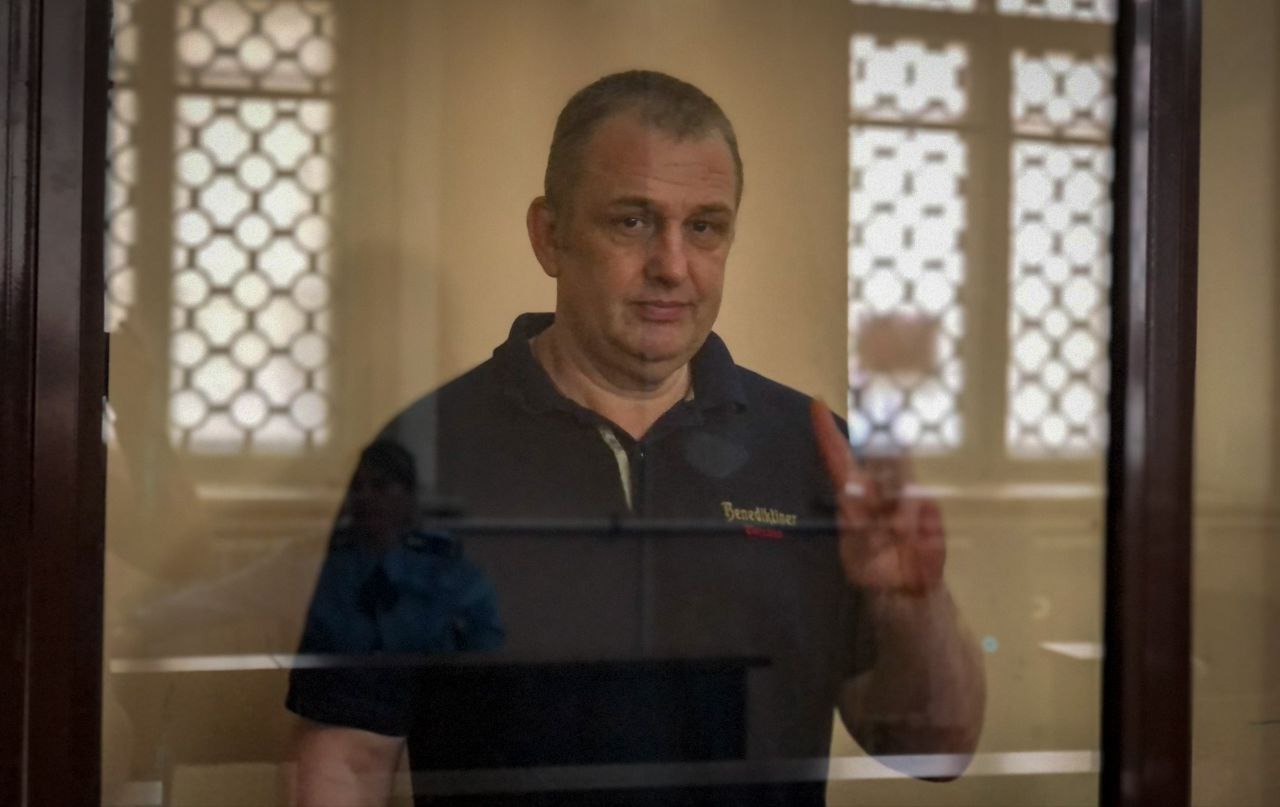
The Crimean Peninsula in Ukraine has been occupied by Russia since 2014. Vladyslav Yesypenko was one of the Ukrainian journalists who reported on the situation for the civilian population and the threats against those who resisted the occupation. On December 10, 2021, he was arrested by the FSB of the Russian Federation after an interview in the city of Simferopol. That day also changed the life of his wife, Yesypenko, who from then on worked with one goal in mind: to tell the world what was happening and try to get Vladyslav released.
March 10, 2021 became the fault line that separated my life into “before” and “after.”
That morning, my husband, Vladyslav Yesypenko, a freelance journalist for Radio Svoboda’s Crimea.Realities project, left for an interview in Simferopol. He often traveled to Crimea to film stories, speak with people, search for the truth where authorities buried it beneath layers of fear and censorship. We were aware it was dangerous, but we did not believe the danger would arrive so swiftly and so ruthlessly.
That day he did not come back.
I learned about his detention from a Crimean activist who had also been detained and whose home had been searched, because she was with Vladislav when the FSB stopped his car. Later, fellow journalists confirmed the news. The FSB arrested Vladyslav, accusing him of “storing explosives” and of “espionage.” I knew this was a scheme perfected by the Russian terrorist machine and used for decades to silence those who dare to speak the truth. But this time, those words named my husband, and because of that, they carried the weight of a sentence.
The First Days: Life in a Void
The first hours and days after his arrest felt like an endless nightmare, where everything is blurred and events seem unreal. Phone calls. The search for lawyers. Messages to human rights organizations. News that made my heart sink.
I tried to grasp what was happening, but in a world where the law has become an instrument of revenge, logic no longer works. I knew only one thing: they torture him.
Later, he would write:
“A particularly strong electric shock made me rise in pain. I tore off the tape that held my hands and pulled the black mask from my face. I saw that I was in a basement with no windows… Hell. Hopelessness. And a feeling of the absurdity of what was happening.”
I reread these words many times. They pierced my understanding of the world and destroyed, forever, my naïve belief that torture belonged to the past. History was repeating itself, only now in a new form, under new flags, but with the same old regime.
Activism as a Way to Survive
I did not have a choice between silence and speaking out. Silence would have meant allowing them to break him and bury him behind prison walls, as they had done to so many others.
So, I acted.
I was posting in social media, giving interviews, appealing to international organizations, human rights centers, and journalists’ unions. At first, I was afraid that my words might make his situation worse. But I soon understood that silence is the foundation of their power. In a world of silence, there is no chance for justice.
I trained myself to speak in public, even though it had never been my strongest skill. I learned to restrain my emotions in front of cameras, sometimes successfully, sometimes not, so that my words would not sound like a cry of despair, but like a clear and unwavering demand: free my husband!
Over time, I felt that this struggle became my way of breathing. When you live for years in constant anticipation of news from prison, activism becomes a form of survival.
Crimea as a Zone of Silence
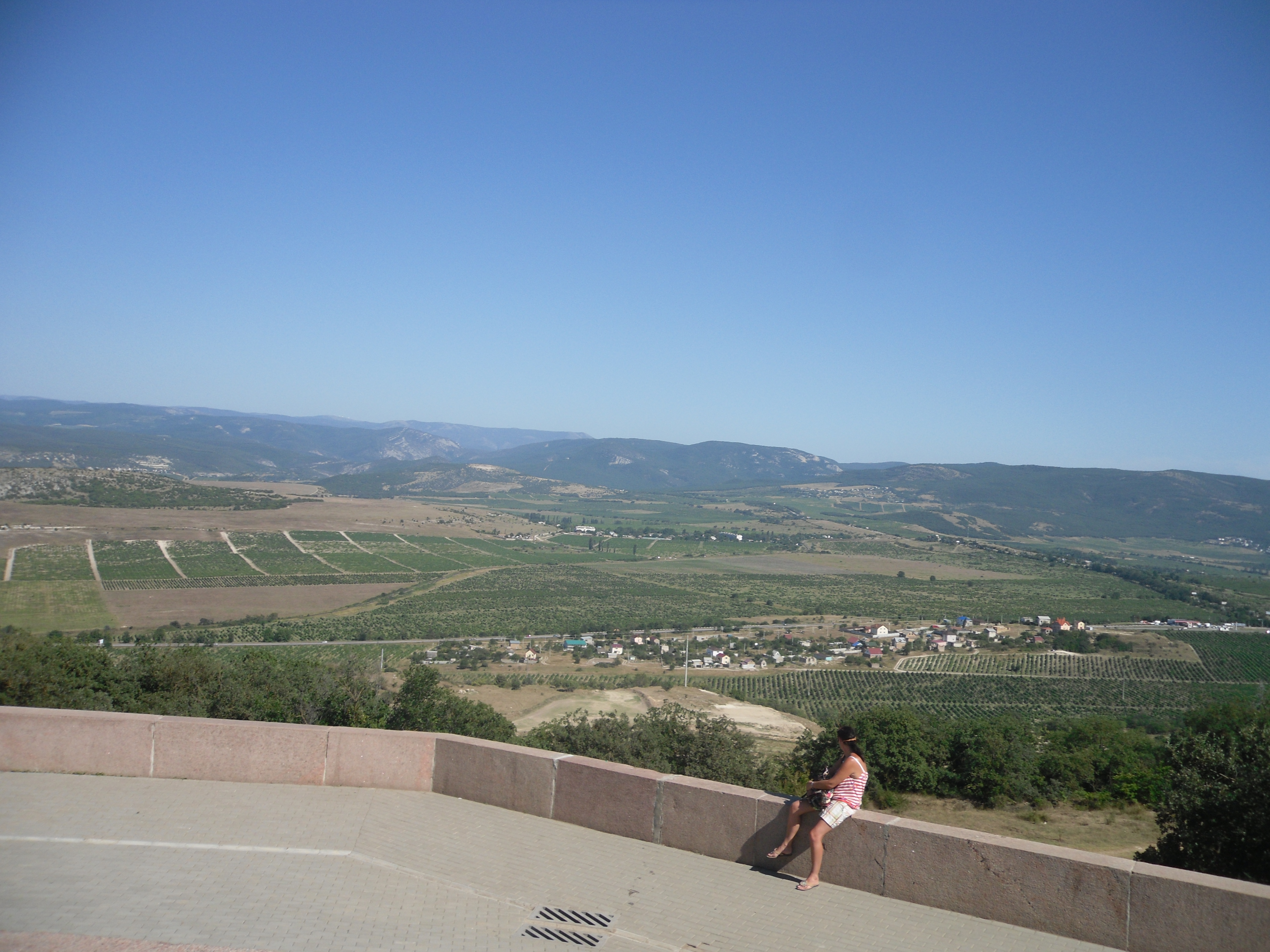
Crimea has always been a place of both beauty and pain for me. A land where mountains meet the sea, where our daughter Stefania was born, and now, a place where truth suffocates under the weight of repression.
Vladyslav knew that traveling there was always a risk. Yet he believed that a journalist must be present where the most important things are happening. He filmed stories about ordinary people, about their lives under occupation, about how the world around them was slowly narrowing.
This is precisely why he was persecuted. As he wrote: “Threats and torture are unacceptable in the 21st century. In 1937, my grandfather was tortured and shot… I believe that those Chekists have grandchildren who are doing the same things as in 1937.”
These words bear not only pain but the weight of historical memory, something the authorities try to obliterate. And it is memory that sustains freedom, even behind bars.
Letters Through Walls
When I received his first letter from the detention center, I read it dozens of times. Every word felt like a breath of air. He wrote about the conditions, about the other prisoners, but he also tried to support me: “I know that you haven’t given up. Perhaps only here have I realized how much I love you and Stesha …”
Katya, hello.
Everything is fine with me. Since my arrest on March 10, I’ve been through a lot, but for now, while I’m giving my confession, there’s no direct pressure being used against me. They’re accusing me of allegedly having a grenade in my car. At first, I denied the charges. When I was brought to court to determine a preventive measure, I invoked Article 51 of the Russian Constitution (which states that “no one is obliged to testify against themselves”). But the FSB found “ways” to make me testify against myself in front of the investigator and the TV cameras.
You shouldn’t come to visit me. I’m afraid you could end up becoming a hostage to this situation. I couldn’t bear that, even though I miss you and Stesha terribly.
Another thing I need to tell you is that they are trying to pressure me into dismissing the lawyers who signed the contract with you. They insist that my interests, both during the investigation and in court, be represented by a lawyer named Violetta Sineglazova, who is an “undercover agent”[1]. I don’t yet know how I will resolve this, but I am not giving up, and I am not losing heart. My cellmate and I train twice a day. During our hour-long walk in the afternoon, we run two kilometers. He calls me “Sensei.” In our free time, we read and talk.
I want to believe that a prisoner exchange between Ukraine and Russia will happen soon and that I will return home. But if it does not, I am certain that I will endure whatever comes and remain steadfast.
Thank you, my dear, for your support. I know you haven’t given up. Perhaps only here have I realized how much I love you and Stesha.
Say hello to my loved ones, family, and friends! March 22, 2021
I wrote him back about home, about friends, about the little things: about the apricot tree in bloom, about our daughter who was a few centimeters taller, and the loss of her first tooth. I knew the letters were read by censors, so I chose my words carefully. Still, every line carried love and faith.
Between the lines there were our conversation, our touch across time. These letters became a bridge across the abyss that separated us.
Trust and Distrust in International Institutions
When I first turned to international human rights organizations, I believed they would respond quickly. It seemed impossible that the world could remain indifferent to such an obvious injustice.
Reality proved more complex. Some organizations reacted immediately; others remained silent for months. I learned to distinguish genuine support from formal responses. I understood that diplomacy has its limits and that statements without action can become another form of silence.
Even when discouragement set in, I continued to speak out. Because every signed petition, every publication, every mention in the media brought closer the day when he would be able to breathe the air of freedom again.
At times, it felt as though international institutions were not listening. Now I know: they are listening, but their language is slow. And I learned not to wait in silence.
Vladyslav sincerely believed that the Ukrainian authorities would do everything possible to secure his release, as well as the release of other Crimean prisoners of conscience. This is what he wrote to me the night before the verdict:
Now it’s up to our country… we did everything we could. I hope that I, and the other political prisoners, will not be forgotten. There was no war today, and judging by what’s being shown on Russian TV, they will come to an agreement.
February 15, 2022
International Struggle
Over time, my activities extended far beyond Ukraine. I wrote open letters, spoke at conferences, and communicated with journalists in different countries.
People often asked me, “Why do you continue? He will not be released or returned through an exchange, because for the Russian side, he is considered a criminal who must serve his full sentence.” And I answered simply: “Because silence is also a crime.”
When international media began to cover his case, when human rights organizations recognized him as a political prisoner, I felt for the first time that we were no longer alone. We had become part of a community of people who refuse to live in a world where journalists are imprisoned for saying the word “truth”
Personal Confusion and Inner Struggle
There were, however, days when my hands fell helplessly to my sides. Days when another so-called “court hearing” ended in despair, when the injustice felt overwhelming, and the inevitability of Vladyslav’s punishment seemed predetermined long before the trial began. Days when Russian propaganda spread lies to destroy his reputation.
Even after the court of first instance delivered its verdict on February 16, 2022, Vladyslav did not regret choosing to stand on the side of light, defending his honor and dignity.
Katya, hello! Today is February 16, nighttime. The hearing is over. The prosecutor requested 11 years… To say I am surprised would be an understatement. I understood that faces (from editor: the FSB operatives) would take revenge for my position, but I did not expect such a sentence.
I am worried about you, about your condition. It was my decision to stand firm in court, and you supported me, thank you.
I, on the other hand, did not always possess such inner strength, though I found enough to continue supporting my husband. There were moments when I did not know where to go next, when I sat in front of the monitor, staring at a blank screen, convinced that everything was in vain.
But each of his letters reminded me: if he does not give up there, in that darkness, then I have no right to give up here.
And whenever I felt utterly exhausted, strength came from the people who reached out to me: “We are with you. We know who he is.”
The Day of Liberation
On June 20, 2025, Vladyslav was released. We embraced again after years that felt like an eternity. His face had changed, new wrinkles and deeper shadows appeared, but his eyes still carried the same light I remembered.
Then he said, “I am happy that I am a free man and a free journalist.”
This moment was not only the end of a nightmare. It was proof that light can break through even the thickest walls. That day, I understood that struggle does not end with the release. It simply takes on a new form — the struggle for others.
Afterword: An Experience That Changes You
Being the relative of a political prisoner means living on the edge of two worlds. In one, you go to work, smile at people, celebrate your child’s achievements, and prepare dinner. In the other, you are constantly thinking about the cold of the cell, the pain, the letters that never arrive, the absence of medical care for Ukrainian citizens in Russian captivity, where a person can die from something as simple as an untreated infection.
This experience taught me to live differently. I learned that fear can be tamed if you choose action instead of silence. That human solidarity can heal. And that even in the darkest times, support can be found in words, in memory and in faith.
We did not only survive imprisonment but were also transformed. We came to understand that freedom is not an abstraction, not a political slogan, but a fragile and priceless value that must be protected every day.
Epilogue: Freedom as a Duty
We returned to life, but it was no longer the same. We learned to cherish simple things: a walk, laughter, windows that are not barred. Along with this came the understanding that freedom is not given — it is a responsibility.
It is a responsibility to speak, to act, and to support those who are being silenced.
Because silence is what prisons for journalists are built on.
And words are what their jailers fear most.
[1] meaning she works in the interests of the FSB